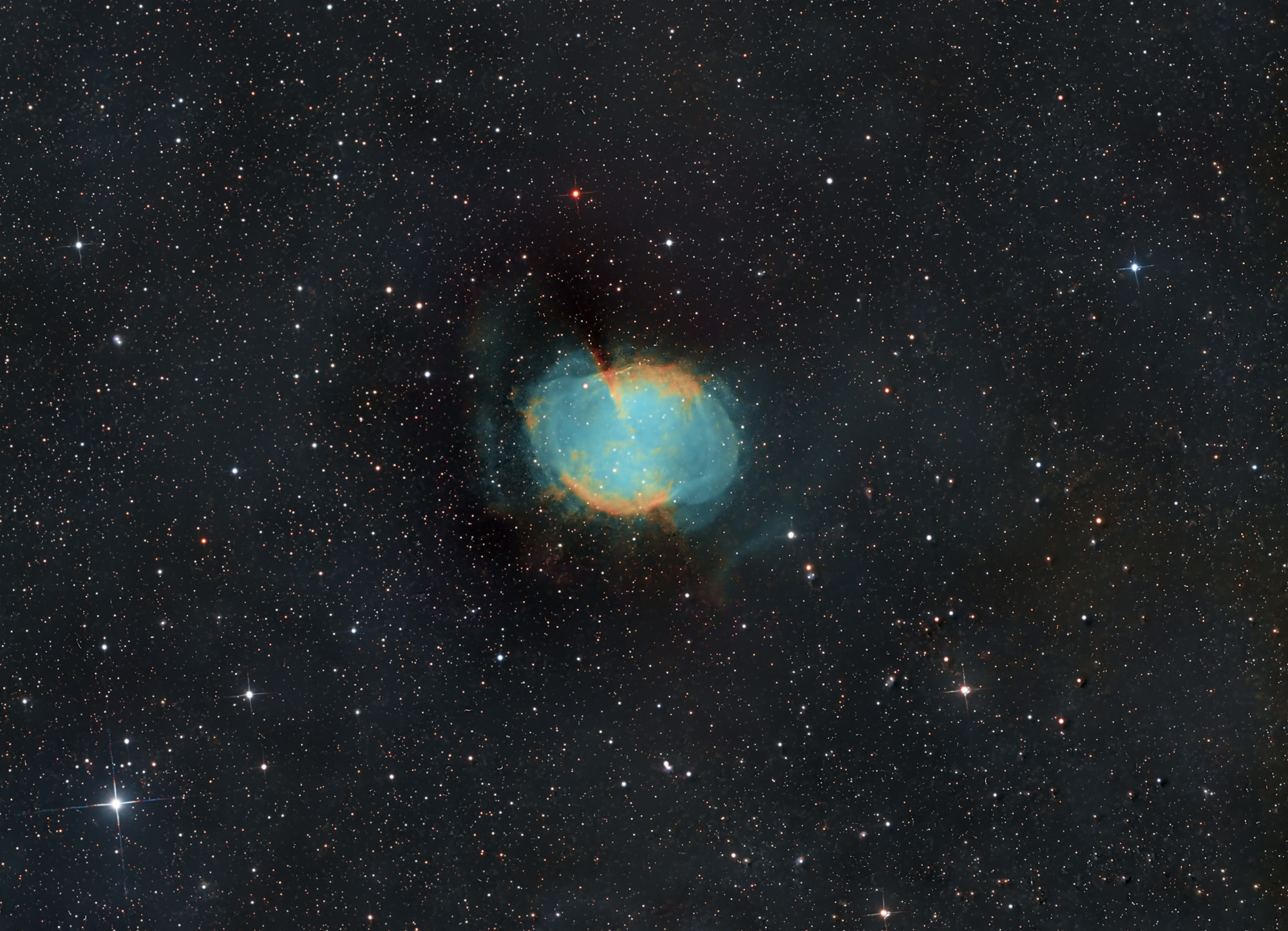
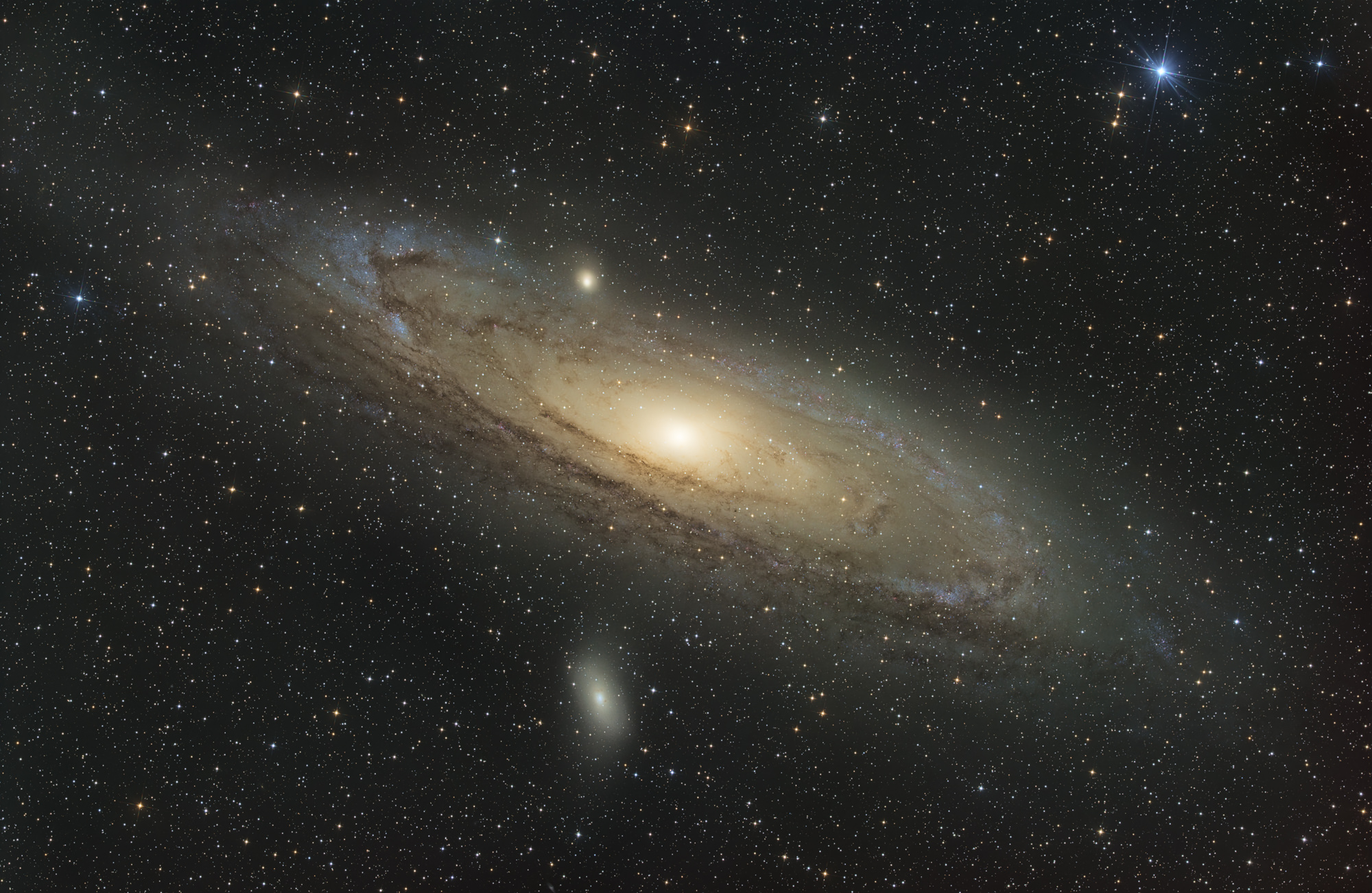
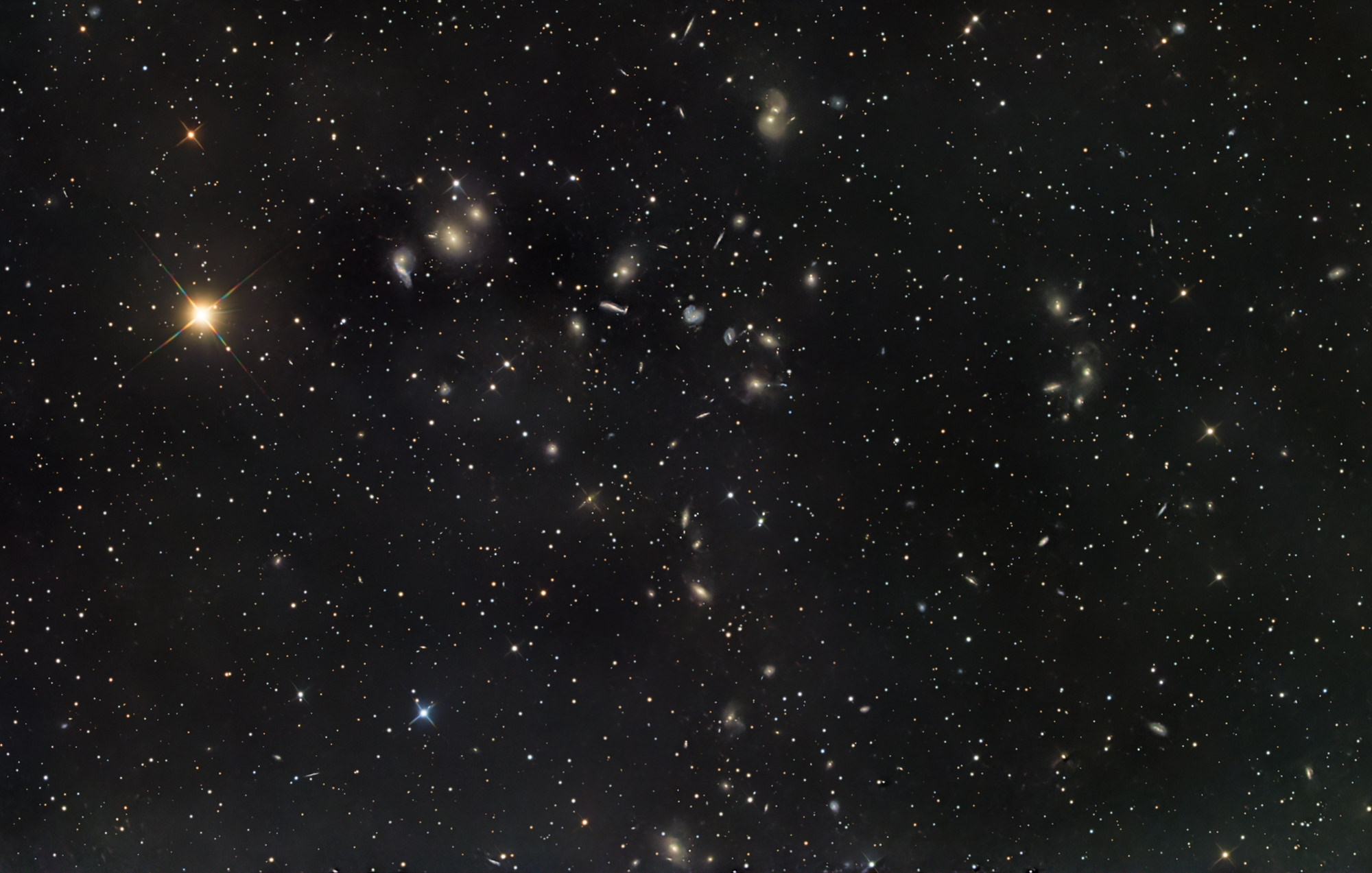
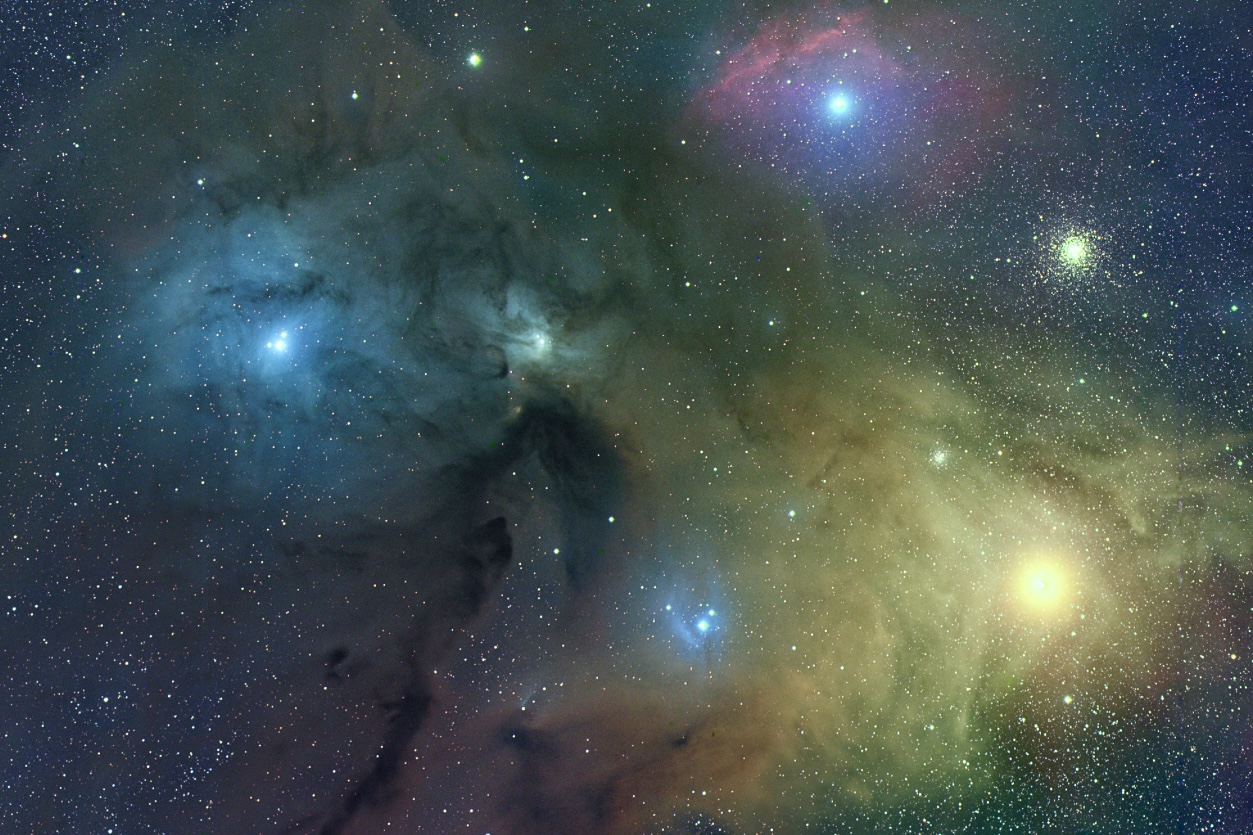
Astrophotography
The Universe – My New Favorite
For many years, nature photography was my way of capturing special moments—landscapes, wildlife, macro worlds, and quiet places far removed from everyday life. With astrophotography, that perspective eventually expanded from the earthly realm to the depths of the universe. Astrophotography ideally combines my enjoyment of technical challenges with a sense of awe at the boundless expanse of the universe. Clear nights under the open sky bring a sense of calm, while the precision required to operate the astronomical equipment compels me to set aside the thoughts of everyday life.And when the data I have gathered finally comes together on the computer to form a beautiful astrophotograph, I feel a great sense of joy once again.
Architecture of the Universe
-
Microcosm and Stars
The fundamental building blocks are atoms, which form gas and dust. From these, gravity creates stars, which in turn are often surrounded by planetary systems.
-
Star clusters and galaxies
Stars clump together to form open or globular clusters. Billions of these stars make up a galaxy (like our Milky Way).
-
Local Groups and Superclusters
Galaxies are rarely isolated. They form small groups (like our Local Group) that come together to form huge superclusters.
-
Filaments and voids
If you look at the cosmos as a whole, its structure is reminiscent of a huge sponge. The cosmos is compared to a sponge because the matter (galaxies and galaxy clusters) is not evenly distributed. It forms a network of fine threads and flat walls (the so-called filaments). In between there are huge, almost empty regions (the Voids). Just like a sponge, solid matter alternates with empty cavities.
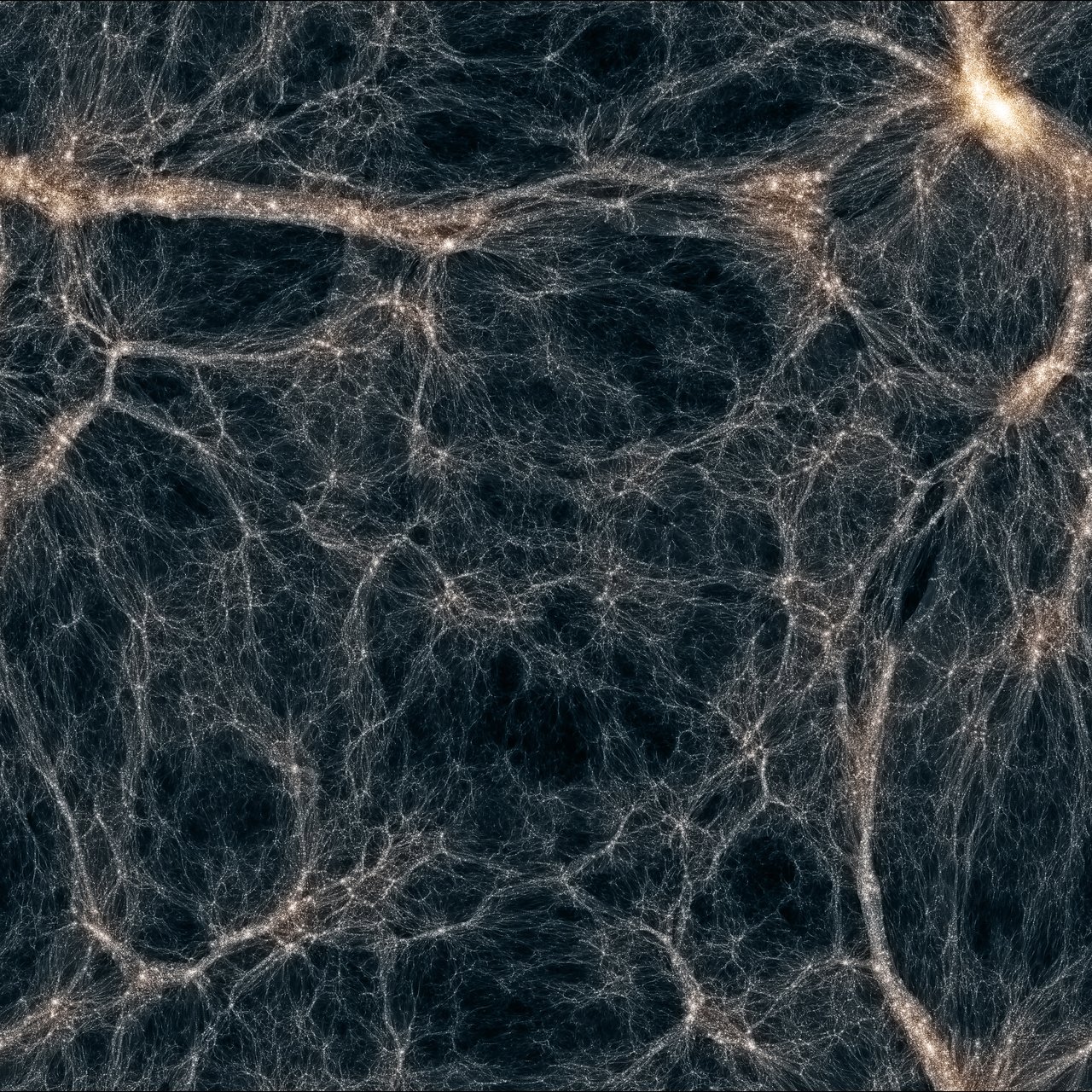
On the largest scales, space resembles a gigantic, porous web (graphic created on a supercomputer).
-
There is far more to the universe than the eye can perceive. The majority of matter and energy in the universe consists of attractive dark matter and repulsive dark energy.
- Ordinary matterOrdinary matter is anything that has mass and occupies space. It makes up everything we can see and touch: planets, stars, and dust clouds, as well as us humans. Across the entire universe, this "normal" matter accounts for an estimated 5% of the cosmos. Chemically speaking, it consists of approximately 75% hydrogen and 24% helium.
- Dark matterDark matter (approx. 26%) is an invisible form of matter in space that neither emits nor reflects light. Although we cannot see it, it reveals itself through its gravity, which acts like an invisible glue. It serves as the "scaffolding" that holds galaxies together.
cf. section Galaxy cluster / Dark Matter. - Dark energyDark energy (approx. 69%) is not matter, but rather a type of repulsive force that acts throughout empty space. It is the reason why the universe is expanding—and why that expansion has even been accelerating for the past few billion years.
cf. section Galaxy cluster / Dark Energy. - Antiquity: Order amidst chaos, painstaking work performed with the naked eye.
Initial objectives were navigation, calendar calculation, and astrology.
Around the 4th century BC, astronomers such as Shi Shen in China compiled the first lists.
The first systematic star catalog in the West is attributed to Hipparchus (around 135 BC). He recorded around 850 stars and incidentally invented the system of Apparent magnitude (brightness), which we still use in modified form today.
The Almagest (c. 2nd century AD): Claudius Ptolemy adopted Hipparchus's data, expanded it to include 1,022 stars across 48 constellations, and—with the Almagest—created the standard astronomical work that remained unchallenged for nearly 1,500 years.
The Almagest is considered the "Noah's Ark" of ancient astronomy. The Almagest is the most important link between the invention of the first brightness scale (magnitude) and our modern system. - The Renaissance and Early Modern Period: Measuring Precision
With the advent of new measuring instruments (and soon the telescope), ancient precision was no longer sufficient.
Uranometria (1603): Johann Bayer published a milestone work. He introduced the Bayer designation, in which stars within a constellation are ordered by brightness using Greek letters (e.g., Alpha Centauri).
Atlas Coelestis (1725): John Flamsteed, England's first Astronomer Royal, cataloged over 3,000 stars with unprecedented precision using telescopes. We still use his Flamsteed numbers (e.g., 61 Cygni) today. - The Age of "Nebulae": Messier and the NGC
At the end of the 18th century, it was no longer just about sharp points (stars), but about blurred spots in the sky.
Messier object (1771/1781): Charles Messier was actually a comet hunter. Because stationary, fuzzy objects were a nuisance during his searches, he cataloged them to avoid confusion. Today, his catalog (M1 to M110) is the most famous list for amateur astronomers and astrophotographers; it contains the most spectacular galaxies, star clusters, and gas nebulae in our sky.
The New General Catalogue – NGC (1888): J.L.E. Dreyer compiled the vast observational data gathered by William and John Herschel. The NGC (and its supplements, the Index Catalogues or IC) comprises nearly 8,000 galaxies and nebulae. When astronomers speak of "NGC 7000" (the North America Nebula) today, they are using this catalogue, which dates back more than 130 years. - Modernity: Photography and Spectroscopy
Around 1900, the photographic plate replaced the human eye. Now, it was possible to collect light for hours and see things that remained hidden from the eye.
Henry Draper Catalogue - HD, 1918–1924): At Harvard College, female astronomers (such as Annie Jump Cannon) classified the spectra of over 225,000 stars according to their temperature (O, B, A, F, G, K, M),
cf section Star Clusters and Asterisms / Colors and Luminosity.
Durchmusterung (Survey): The Durchmusterung was followed in the mid-20th century by the Palomar Observatory Sky Survey (POSS), which photographically mapped the entire northern sky. - The Digital Age: Space Astronomy Today
Today, automated telescopes on Earth and satellites in space gaze out into the cosmos. Catalogs are no longer printed; instead, they are gigantic databases.
Hipparcos and Gaia: The ESA satellite Hipparcos (1989) was the first to measure highly precise positions from space. Its successor, the Gaia space craft, provided data for a three-dimensional catalog of over 1.8 billion stars in our Milky Way — including their motion and exact distances.
Gaia’s final targeted observation took place on January 10, 2025. Following several weeks of testing the onboard systems, Gaia left its orbit near the L2 Lagrange point and was placed into a heliocentric orbit beyond Earth's sphere of influence. After all remaining data had been transmitted to Earth, Gaia was decommissioned on March 27, 2025.
Sloan Digital Sky Survey (SDSS): An automated telescope in New Mexico has scanned half the sky and provided three-dimensional positions of millions of galaxies and quasars—the foundation of modern cosmology.
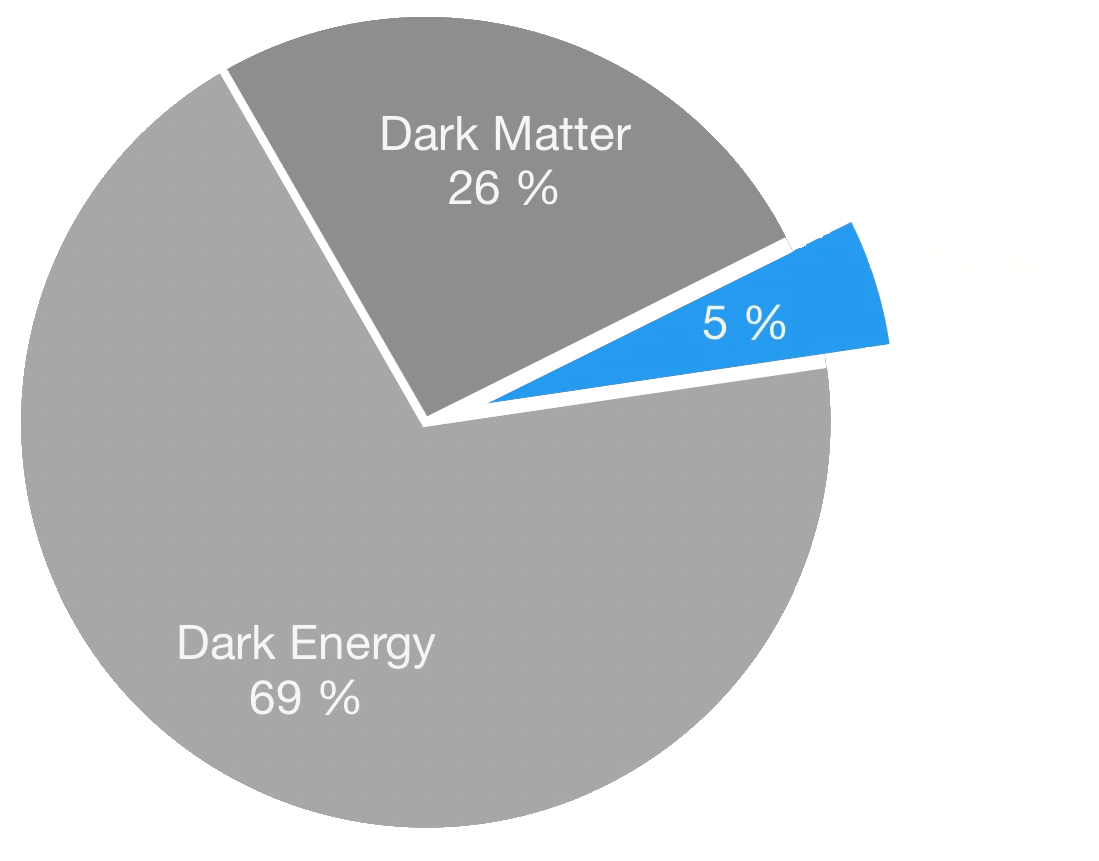 However, their true nature remains a mystery. These seemingly massive structures account for only a fraction (approx. 5%) of the universe.
The large-scale composition breaks down as follows:
When we put together our mathematical models, our physical laws (such as Albert Einstein's general theory of relativity), and our observations of the universe, much of the mass and energy is missing to explain the movements of stars and the expansion of the universe. Without the concepts of dark matter and dark energy, our current science would not be able to explain the universe.
The Age of the Universe: Big Bang and Hubble Constant
Cosmological research estimates the age of the universe at approximately 13.8 billion years.
Since the Big Bang, the universe has been expanding at a specific rate known as the Hubble constant (Hubble-Lemaître law).
The Hubble constant indicates how much faster a galaxy is receding from us for every megaparsec (approximately 3.26 million light-years) of distance. It is central to determining the age of the cosmos.
Wikipedia: Big Bang
Wikipedia: Hubble's law
Wikipedia: Georges Lemaître
The three steps to determine the Hubble constant
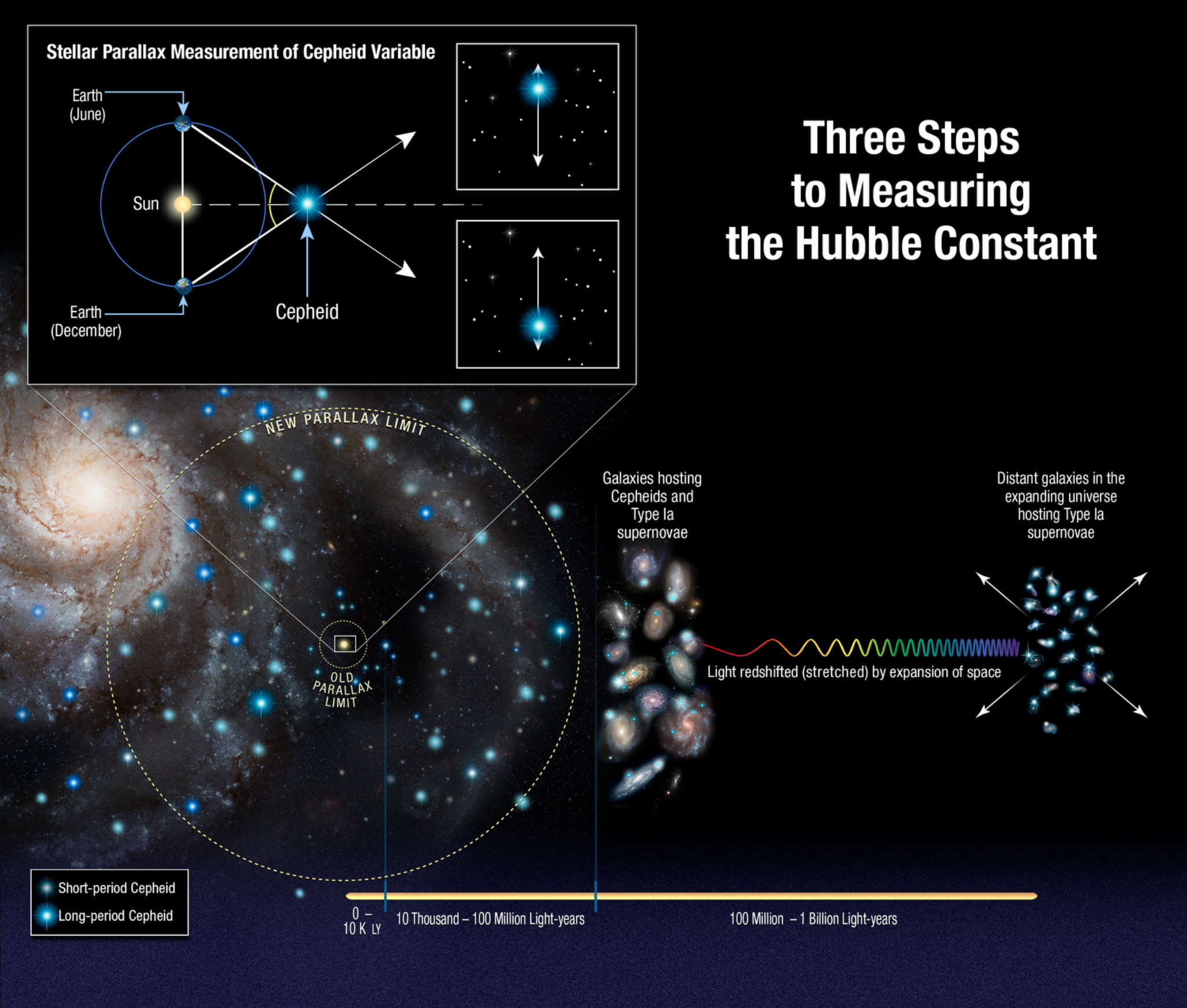
Step 1: Cepheids and the parallax method
The first step is shown on the left side of the image. Astronomers use the NASA/ESA Hubble Space Telescope to measure the distances to pulsating stars known as Cepheids. In doing so, they employ parallax—a fundamental geometric method in which a star's apparent position shifts slightly due to Earth's motion around the Sun.
See also Star Clusters and Asterisms / Distance of the stars from Earth / Trigonometric parallax measurement on this website
Stars and Star Clusters / Distance of Stars from Earth / Trigonometric parallax measurement
on this website.
Measuring these tiny positional shifts is extremely challenging. The observed changes correspond roughly to the apparent size of a grain of sand at a distance of 160 kilometers.
The current Hubble study is based on eight newly analyzed Cepheids in our Milky Way. These stars are located at distances of approximately 6,000 to 12,000 light-years and are about ten times farther away than Cepheids whose parallaxes had been measured previously. Because they are very similar to Cepheids in other galaxies, they provide a crucial basis for calibrating the cosmic distance ladder.
Once the true luminosity of a Cepheid is known, it can serve as a cosmic standard candle. A special property of these stars aids in this: the pulsation period is directly related to their luminosity. The more slowly a Cepheid pulsates, the brighter it is. By comparing its actual and observed brightness, its distance can be precisely determined.
Step 2: Calibration of Type Ia supernovae
In the second step, astronomers turn their gaze to nearby galaxies outside the Milky Way. There, they search for Cepheids in galaxies where a Type Ia supernova has recently been observed.
Type Ia supernovae are excellent additional distance indicators because they reach nearly the same peak brightness. Using previously calibrated Cepheids, astronomers first determine the distance to the respective galaxy and can then derive the actual luminosity of the supernova observed there.
Step 3: Measuring the expanding universe
In the third step, Type Ia supernovae in very distant galaxies are studied. Unlike Cepheids, these stellar explosions are so luminous that they can be observed across distances ranging from hundreds of millions to billions of light-years.
By comparing their actual and apparent brightness, astronomers determine the distance to these galaxies. At the same time, they measure the redshift of their light—the lengthening of light wavelengths caused by the expansion of space.
By combining distance and redshift, it is possible to calculate how fast the universe is expanding today. This value is known as the Hubble constant and is one of the most important quantities in modern cosmology.
Astronomical Catalogs – From Antiquity to Modern-Day Sky Surveys
The history of astronomical catalogs is, in essence, the history of our own horizon.
Historical Milestones:
Astrophotography for Everyone
The universe is so vast that the light from many stars hasn't yet reached us. Therefore, we only see a small part of it from Earth.
The reasons for this are:
- The distance of the starsMany stars are located at enormous distances from Earth, and light takes time to travel these distances. The farther away a star is, the longer it takes for its light to reach us.
- The expansion of the universeThe universe is expanding, which means some galaxies are moving away from us. This can cause light from those galaxies to be redshifted and take longer to reach us. When scientists talk about the expanding universe, they mean that it has been growing ever since its beginning with the Big Bang.
The galaxies outside of our own are moving away from us, and the ones that are farthest away are moving the fastest. This means that no matter what galaxy you happen to be in, all the other galaxies are moving away from you.
However, the galaxies are not moving through space, they are moving in space, because space is also moving.
In other words, the universe has no center; everything is moving away from everything else.
If you imagine a grid of space with a galaxy every million light years or so, after enough time passes this grid will stretch out so that the galaxies are spread to every two million light years, and so on, possibly into infinity. - Age of the universeThe universe has a certain age (about 13.8 billion years), and there are stars whose light simply hasn't had enough time to travel to us.
- Dust and gasMeanwhile, interstellar matter such as dust and gas can scatter or absorb light on its way to Earth, which can also prevent us from seeing the light from certain stars.
- Limits of observationThere are technical and physical limitations to our observations. Some stars are simply too faint or too distant to be seen with our current telescopes.
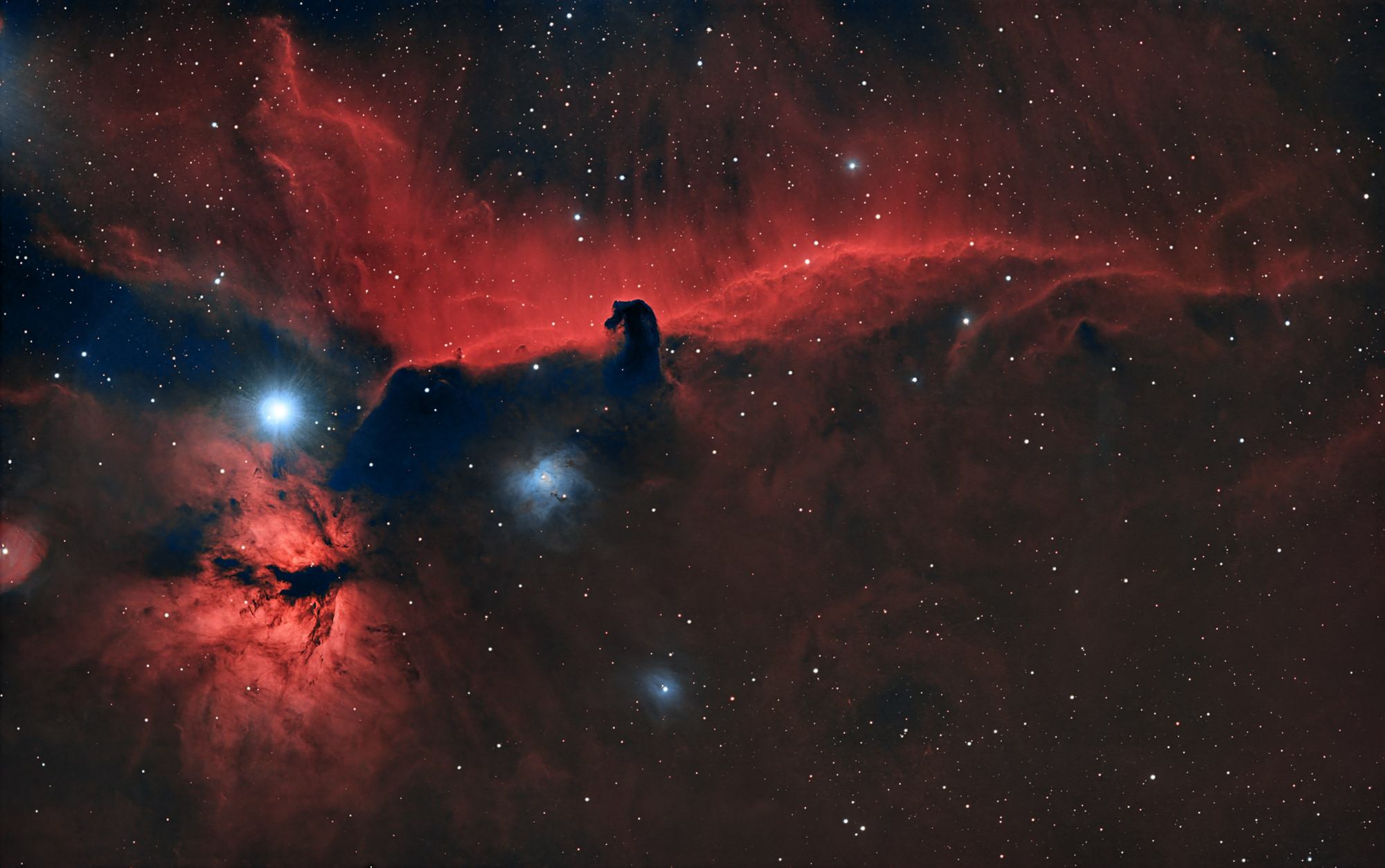
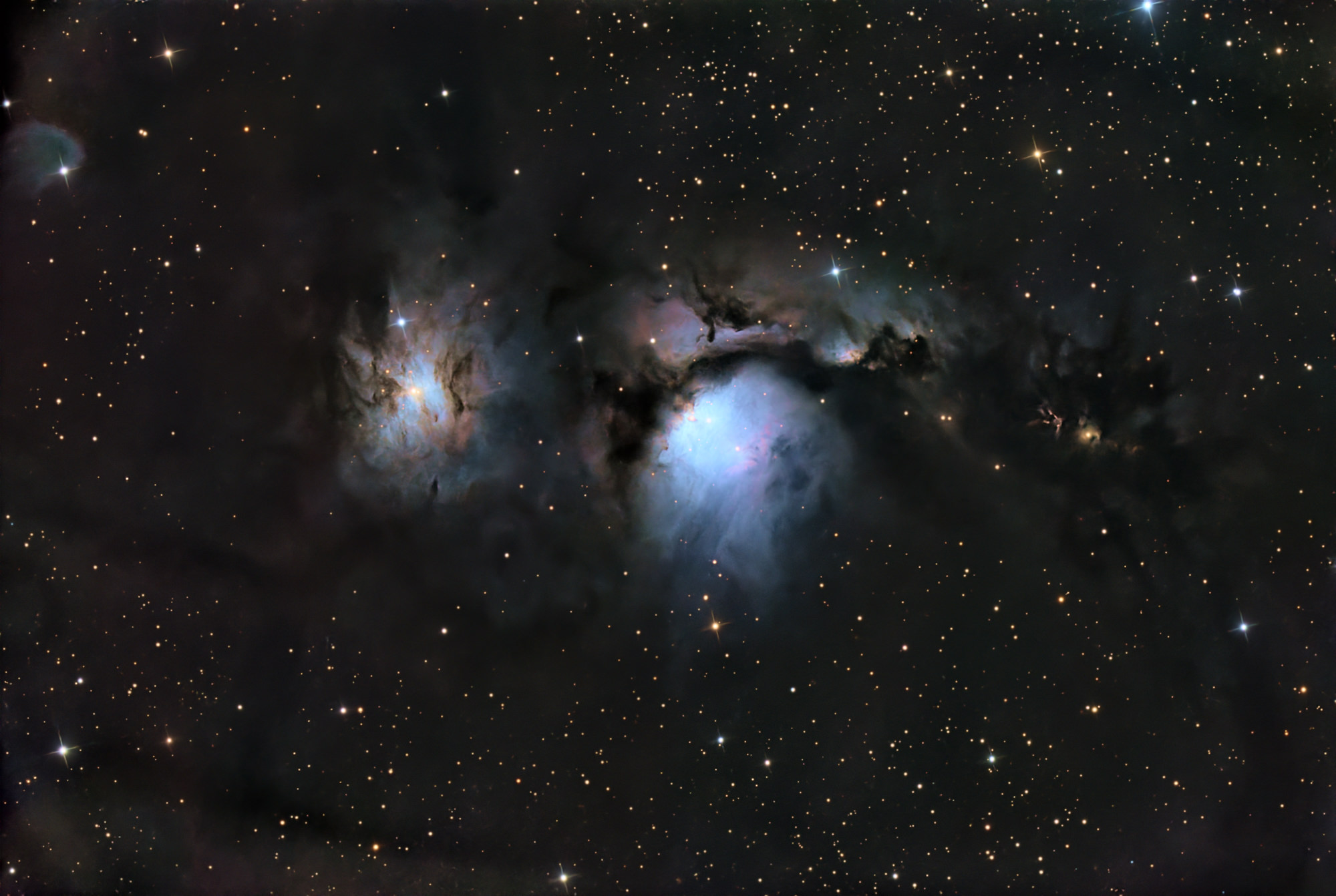
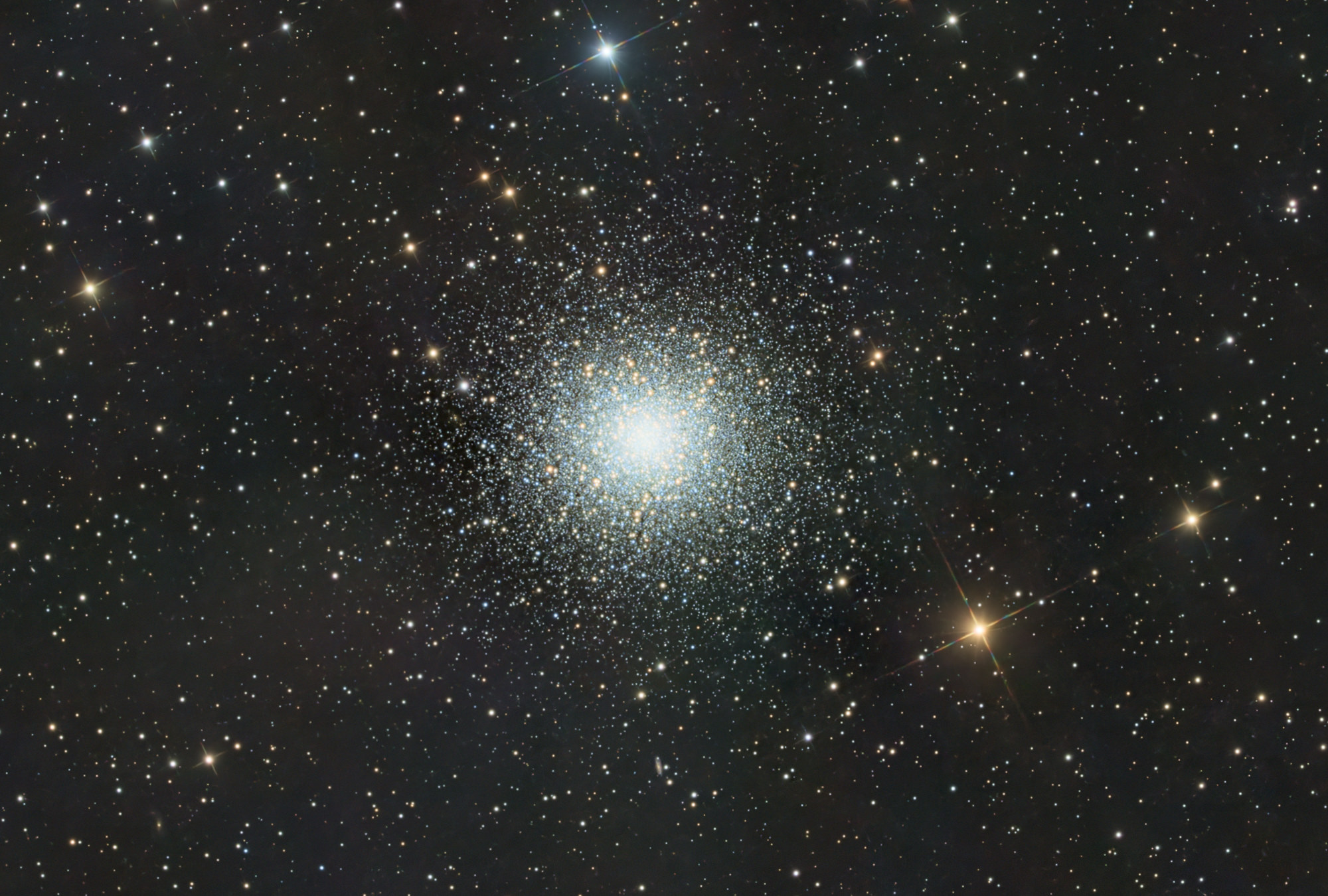
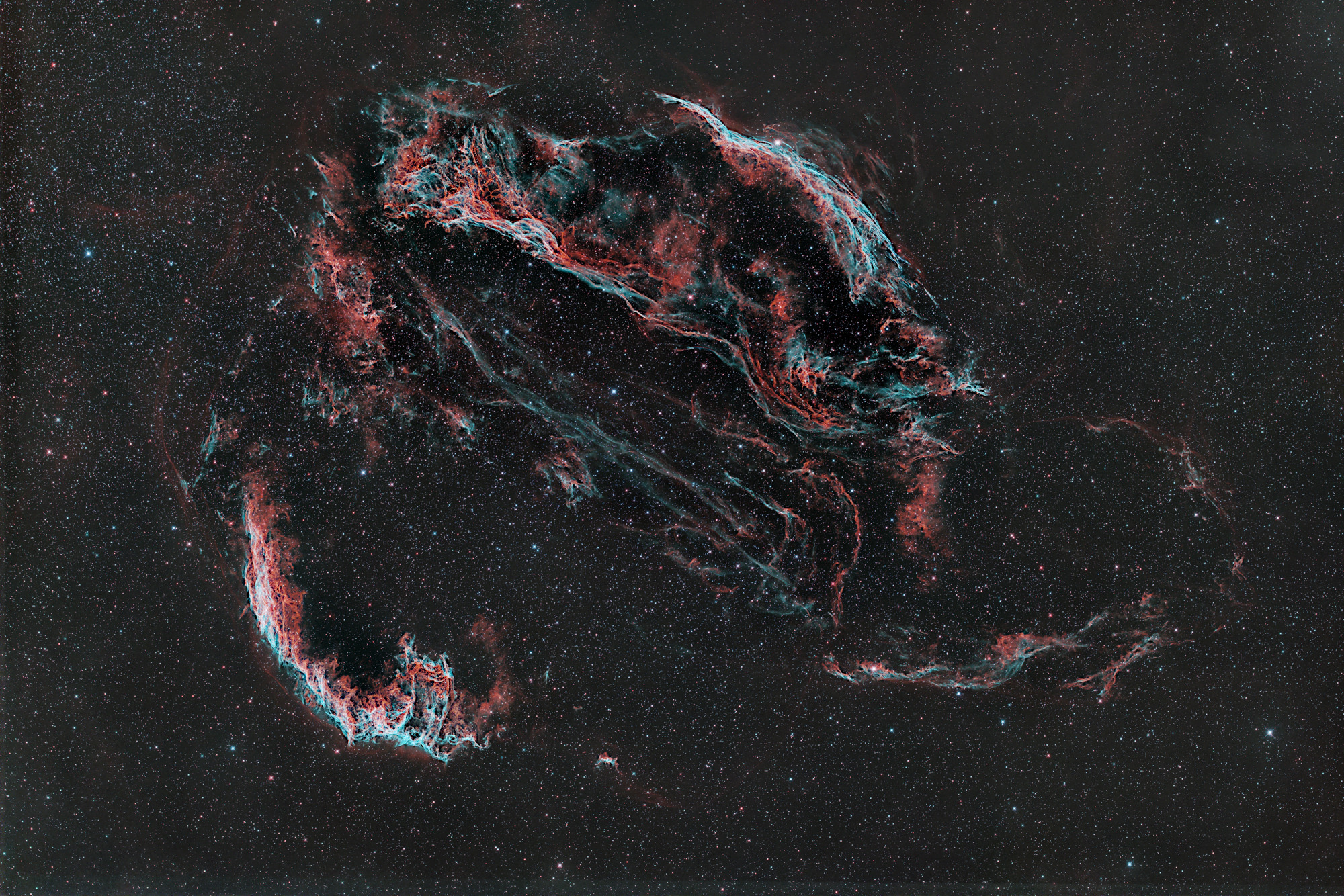
The following images were taken with special astro cameras, telephoto lenses with focal lengths between 100mm f/2.8 and 500mm f/4.0, a Newtonian telescope Takahashi Epsilon130 and a 8” Ritchey-Chretien Telescope.
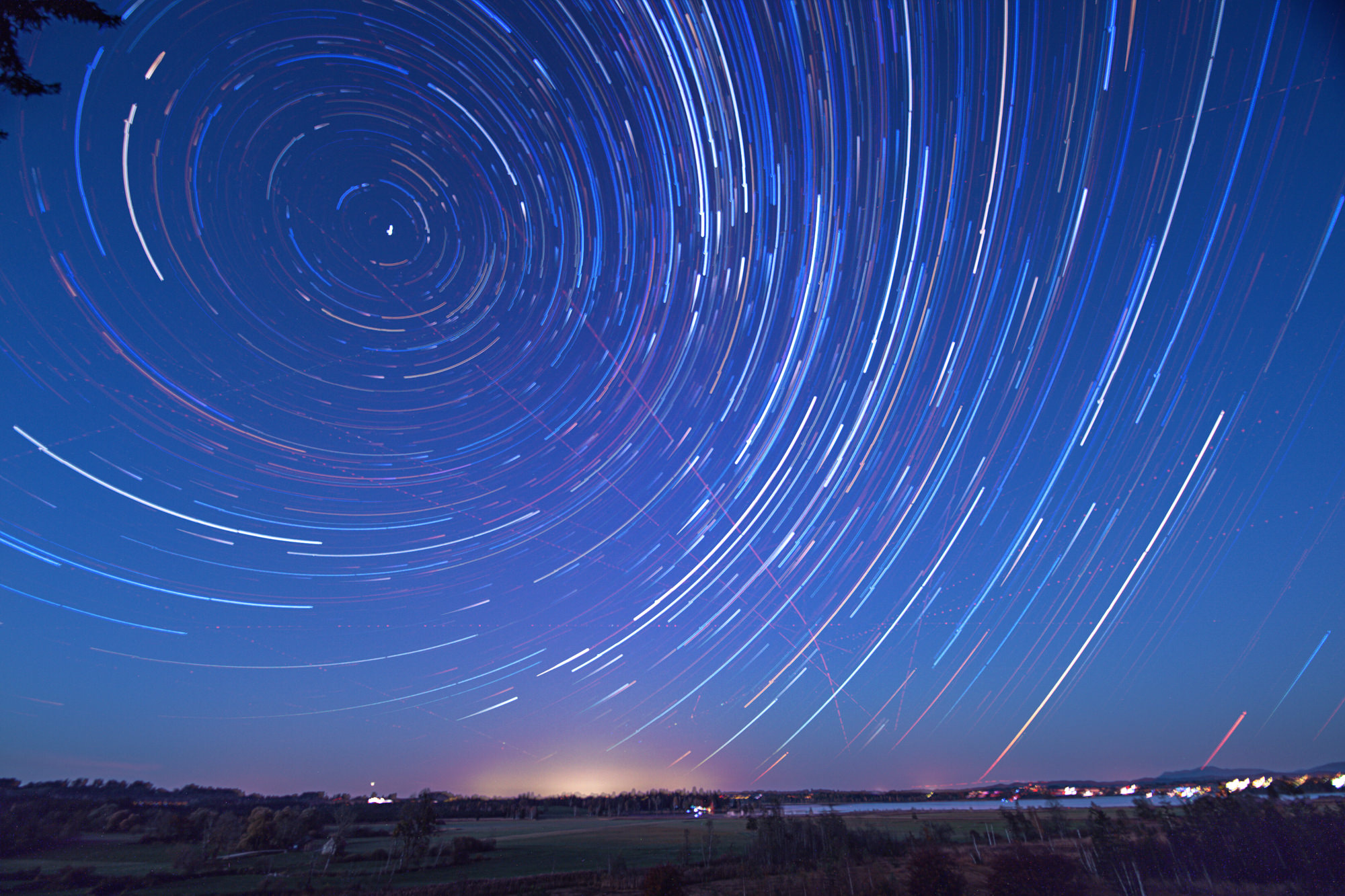
To compensate for the Earth's rotation during long exposure times, the telescope/lens must track the stars very precisely. This is done with a special motorized device, see Wikipedia Mount.
A journey through space aboard a virtual spaceship
To mark the anniversary of the launch of the NASA/ESA/CSA James Webb Space Telescope, ESA presented a fascinating compilation of breathtaking space images.